Rope Access
Inspection and maintenance at height delivered to the IRATA method — without scaffolding, and without extending your outage.
01 — Overview
Access is the problem; maintenance is the work
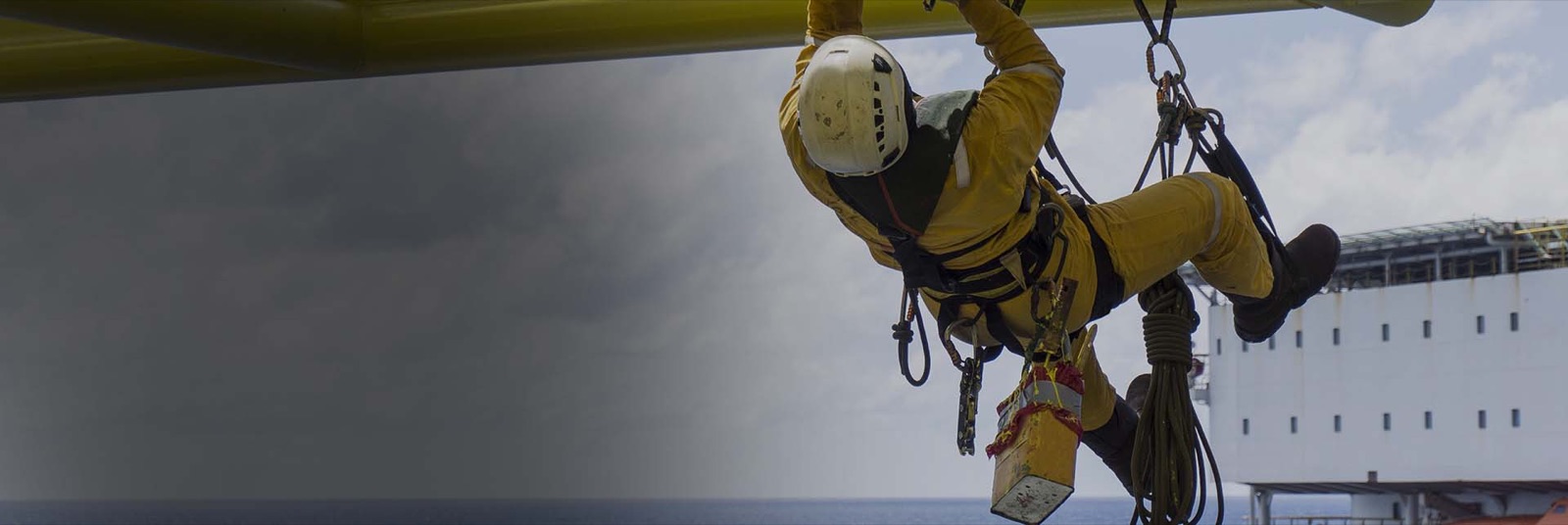
Rope access lets inspection and maintenance trades reach difficult locations quickly and safely, using ropes and the IRATA work method rather than temporary scaffolding. For asset owners the arithmetic is compelling: shorter mobilisations, no scaffold build-up on live plant, and crews who arrive trained for the environment they will work in.
GarnetShores fields IRATA-certified technicians organised into self-sufficient teams, each under a Level III supervisor. Our crews deliver both preventive and corrective maintenance scopes — from routine thickness sampling and coating survey through to corrective repair of defects found — at onshore facilities and offshore locations, working to the IRATA International Code of Practice and our clients' site rules.
Most of this work is delivered on a call-off basis: inspection campaigns scheduled around production, and shutdown or campaign work sequenced against outage windows.
02 — Scope of work
What our rope access crews deliver
- Close visual and general inspection of structures, pipework, vessels and flare systems, with photographic and written reporting
- Ultrasonic thickness sampling and corrosion mapping in support of asset integrity programmes
- Surface preparation and support for non-destructive testing campaigns at height
- Preventive and corrective maintenance of small-bore pipework, valves and actuators at height
- Bolt torquing and tensioning on inaccessible flanges, delivered under our bolting procedures
- High-pressure water jetting and surface preparation for coating works
- Coating survey, spot repair and re-instatement of protective coatings
- Removal and reinstatement of insulation and cladding
- Anomaly verification and follow-up inspection campaigns
- Dropped object surveys and securing of loose items at height
03 — Typical applications
Where the method earns its keep
- Pipe racks and process columns
- Flare booms and flare tips
- Offshore platform legs, decks and splash-zone areas
- LNG storage tank exteriors and jetty loading structures
- Stacks, cooling towers and ducting
- Bridges, gantries and conveyor structures
- Building façades and roof-level plant
- Crane booms and lattice structures
04 — Equipment
What the crews bring
- IRATA-compliant rope access kits — ropes, harnesses and backup devices on a documented pre-use and periodic inspection cycle
- Rescue and retrieval equipment staged and rigged at every worksite, briefed before first entry
- Industrial hardware from established manufacturers, quarantined and tagged when inspection falls due
- Ultrasonic thickness gauges, data loggers and cameras for inspection scopes
- High-pressure water jetting units with trained and equipped operators
05 — FAQ
Rope access — questions we are often asked
Do you work offshore as well as onshore?
Yes. Crews are mobilised to onshore facilities and to offshore assets, with rotations and travel arranged to suit the campaign. Offshore crew hold the required offshore emergency and medical training for the asset they are deployed to.
How quickly can a crew mobilise?
Under an existing call-off contract, standard mobilisation is within 72 hours of notice, subject to permit and induction requirements at the site. For new clients we agree the mobilisation procedure before the contract starts, so the first call-off runs as smoothly as the tenth.
Is rope access appropriate on live plant?
Used correctly, yes — rope access has a strong safety record across the industry, and the method avoids the scaffold erection and hot work that add risk on operating sites. Every scope still runs under our permit-to-work and task risk assessment framework, with rescue plans briefed before work begins.
What reporting do we receive at close-out?
Every campaign closes with a documented pack: man-hours by scope, inspection findings with photographs, thickness data where taken, anomaly registers, and records of any corrective work completed. Findings are written to feed directly into your asset integrity management system.