Composite Repair
Weld-free repair of corrosion and damage — often without taking the line out of service.
01 — Overview
Repair without fire, without welding, often without shutdown
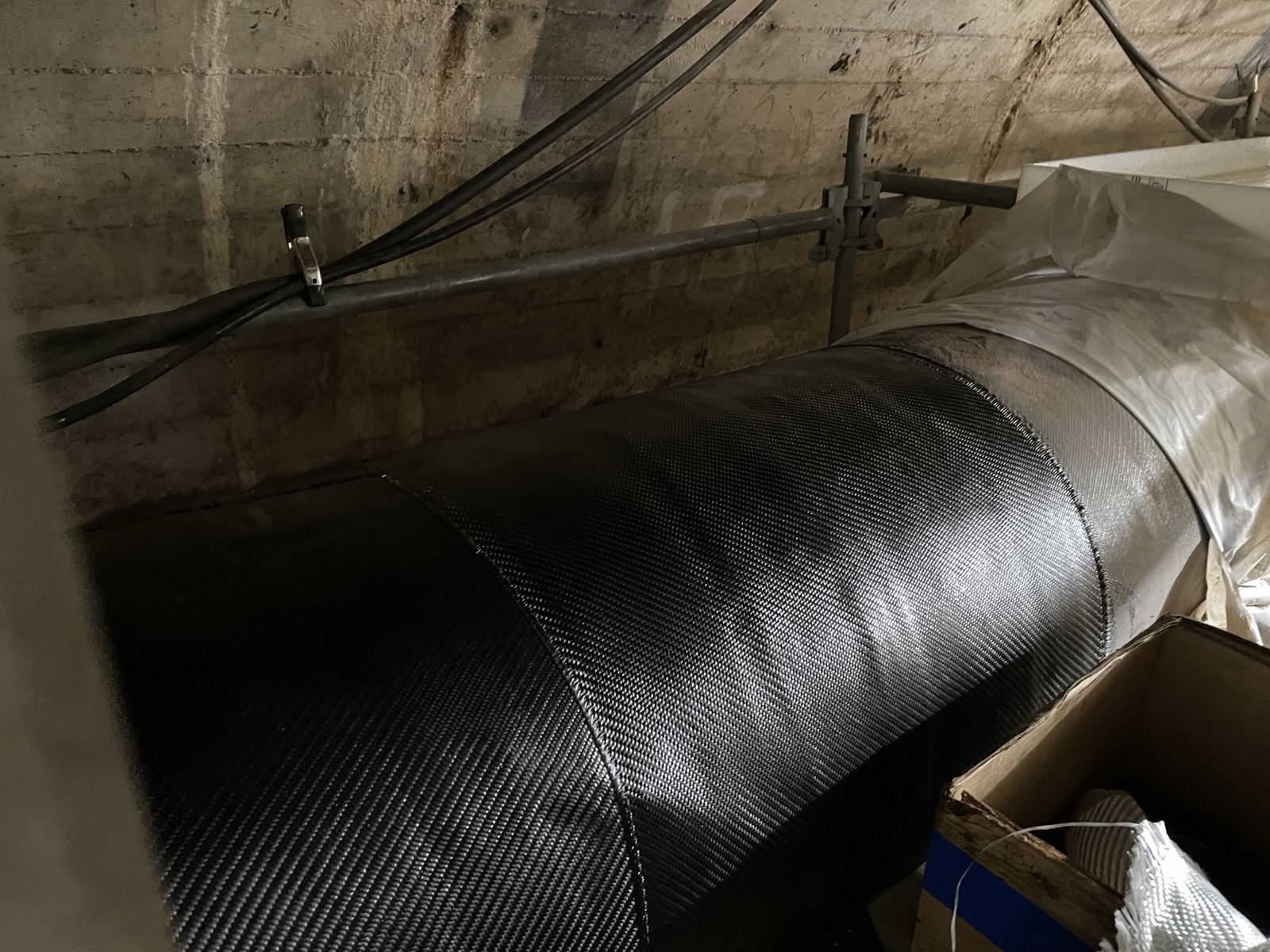
Composite wrap repair restores the strength of corroded or damaged pipes, vessels and static equipment without hot work. For asset owners under pressure to keep plant running, it converts what would be an isolation and welding job into a planned, engineered repair — frequently executed with the line still in service.
Every GarnetShores repair begins with an engineering assessment: defect characterisation, operating conditions and a calculated repair design. Installation follows the system manufacturer's qualified procedure, with surface preparation, environmental control and cure verification recorded — because a composite repair is only as good as its least-witnessed step.
The method sits naturally alongside ourrope access capability: wraps can be installed at height and in congested areas without scaffolding, and the repair becomes part of the site'sflange and jointintegrity record where adjacent connections are involved.
02 — Scope of work
What our composite repair crews deliver
- Engineering assessment of defects and repair design — wrap type, thickness and length determined by calculation
- Surface preparation by abrasive blasting or power tool cleaning to the specified cleanliness and profile
- Filler and load-transfer application over wall loss, pitting and through-defects within design limits
- Composite wrap installation using glass and carbon fibre systems with epoxy matrices
- Repairs to straight pipe, elbows, tees and irregular geometries
- Controlled curing with environmental enclosure, heating and cure verification
- Online repairs to operating lines, where the engineering assessment permits
- Post-repair inspection, with as-built records and a recommended re-inspection interval
- Protective over-wraps for abrasion, corrosion under insulation and mechanical damage
- Supporting UT thickness survey before and after repair to verify condition
03 — Typical applications
Where the method pays for itself
- Seawater and firewater piping with external corrosion
- Process pipework with localised wall loss
- Corrosion under insulation on covered lines
- Vessel nozzles and tank shell connections
- Eroded bends and slurry line fittings
- Offshore risers and splash-zone pipework
- Temporary strength reinforcement ahead of planned replacement
04 — Equipment
What the crews bring
- Abrasive blasting and power tool surface preparation equipment
- Composite repair systems from established manufacturers with published design data
- Environmental control: enclosures, dehumidification and heating blankets for controlled cure
- Ultrasonic thickness gauges for pre- and post-repair verification
- Data loggers recording cure temperature throughout each repair
05 — FAQ
Composite repair — questions we are often asked
Can a repair be done with the line in service?
Frequently, yes. Composite repair is one of the few methods that can restore strength on an operating line without welding or isolation. Whether a particular defect qualifies is decided by the engineering assessment — defect type, operating pressure and temperature, and access all factor in.
How strong is a composite repair compared with the pipe?
A correctly designed and installed wrap is calculated to restore the original hoop strength of the pipe, and the calculation is included in the repair documentation. The design is defect-specific — it is not a case of wrapping more layers for more confidence.
How long does a repair last?
Design lives are specified per repair and typically range from two years for temporary reinforcement to twenty years for permanent repairs. Every repair pack states the design life and the re-inspection interval needed to keep the qualification valid.
What standards govern the work?
Repairs are designed and installed in accordance with industry-recognised composite repair practice and the system manufacturer's qualification data, together with the client's engineering specifications. We do not install systems for which no published design basis exists.